





Making homemade pasta is a relaxing and rewarding kitchen hobby. You do not need expensive equipment or advanced cooking skills to get started. With a few everyday tools, simple ingredients, and some practice, you can make fresh noodles for a weeknight meal or a special dinner.
Fresh pasta has a soft texture and cooks quickly. It also gives you plenty of room to experiment with shapes, sauces, and flavors. The process can be simple, hands-on, and enjoyable from start to finish.
Start With Basic Ingredients
A simple pasta dough usually requires only flour, eggs, water, and salt. Many traditional recipes use eggs, while others use water and flour. For beginners, an egg-based dough is a good place to start because it is flexible and easy to shape.
Simple beginner recipe
For about two to three servings, gather:
– 2 cups all-purpose flour
– 2 large eggs
– A small pinch of salt
– 1 teaspoon of olive oil, optional
– A little water, only if needed
All-purpose flour works well for practice. If you later want to explore different textures, you can try semolina flour or a blend of all-purpose and semolina flour.
The amount of flour a recipe needs can change depending on the size of the eggs, humidity, and the flour itself. Focus on the texture of the dough rather than following the measurements too rigidly.
Use Tools You Already Have
You do not need a pasta machine to begin. A clean counter, rolling pin, and sharp knife are enough for many homemade pasta shapes.
Useful kitchen tools include:
– Measuring cups or a kitchen scale
– A large mixing bowl
– Fork or wooden spoon
– Clean work surface
– Rolling pin
– Bench scraper or spatula
– Sharp kitchen knife
– Baking sheet or clean towel
– Large pot for cooking
– Slotted spoon or colander
A bench scraper is helpful for moving dough and cleaning flour from the counter, but it is optional. A regular spatula or the flat edge of a butter knife can also work carefully.
If you have a pasta machine, you can use it later to create thin, even sheets. However, hand rolling is an excellent way to learn how the dough should feel.
Make and Knead the Dough
Place the flour on a clean work surface or in a large bowl. Make a well in the center and add the eggs and salt. Use a fork to gradually pull flour from the edges into the eggs.
Continue mixing until a rough dough forms. If the dough feels dry and crumbly, add water one teaspoon at a time. If it feels very sticky, sprinkle in a little more flour.
Transfer the dough to a lightly floured surface and knead it for about eight to ten minutes. Press the dough forward with the heel of your hand, fold it back, turn it, and repeat.
The dough should become smooth, firm, and slightly springy. It may feel stiff at first, but kneading helps develop its structure. If your hands become tired, let the dough rest for a few minutes and then continue.
Once the dough is smooth, shape it into a ball and wrap it in plastic wrap or cover it with an upside-down bowl. Let it rest for at least 30 minutes. Resting allows the dough to relax, making it easier to roll.
Roll the Dough by Hand
Divide the rested dough into two or four pieces. Keep the pieces you are not using covered so they do not dry out.
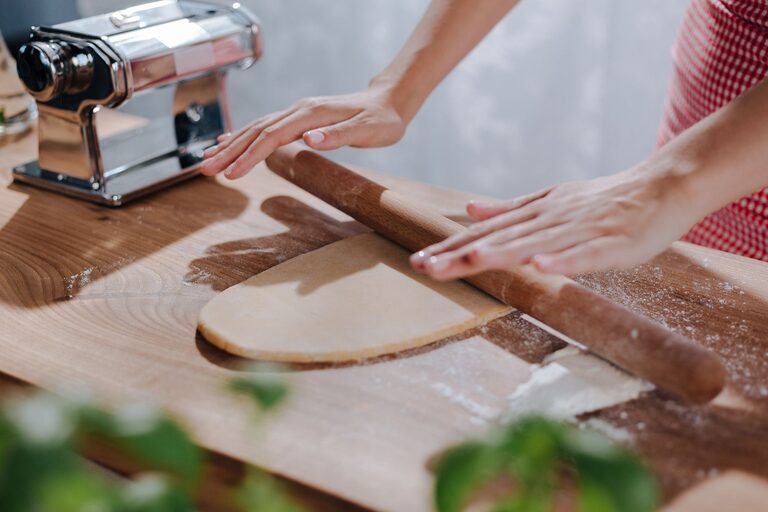
Flatten one piece with your hands, then roll it with a rolling pin. Turn the dough often and add a small amount of flour if it begins to stick. Try to roll from the center outward to create an even sheet.
For many noodles, roll the dough until it is thin enough to see the outline of your fingers through it. It does not need to be perfectly uniform. Slight variations are part of the charm of handmade pasta.
If the dough keeps shrinking while you roll it, let it rest for another 10 to 15 minutes. This usually means the dough needs more time to relax.
Try Easy Pasta Shapes
Begin with shapes that do not require special equipment.
Tagliatelle or fettuccine
Lightly flour the pasta sheet and fold it loosely into a flat roll. Use a sharp knife to cut strips. Unroll each strip and place the noodles on a floured baking sheet or clean towel.
Maltagliati
Cut the sheet into irregular triangles, squares, or diamonds. The name means “badly cut,” so this shape is especially forgiving. It is excellent for soups, beans, and hearty sauces.
Simple hand-torn pasta
Pinch or tear small pieces from the dough and flatten them with your fingers. This method creates rustic pieces with uneven edges that hold sauce well.
Filled pasta
Once you are comfortable with rolling, try filled shapes such as simple ravioli. Place small portions of filling on one sheet, cover with another sheet, press around each mound to remove air, and cut into squares.
Start with a small batch when making filled pasta. The pieces can take longer to assemble, but they are a fun project for a relaxed afternoon.
Cook Fresh Pasta Carefully
Bring a large pot of water to a steady boil and add a generous amount of salt. Fresh pasta cooks much faster than dried pasta, often in two to four minutes depending on its thickness.
Add the pasta and stir gently during the first minute to keep the pieces from sticking together. Begin tasting early. The pasta is ready when it is tender but still has a slight firmness in the center.
Reserve a small cup of cooking water before draining. The starchy water can help loosen a sauce and bring it together. Avoid rinsing the pasta unless you are using it in a cold dish, since rinsing removes surface starch that helps sauce cling.
Match Pasta With Simple Sauces
Fresh pasta pairs well with uncomplicated sauces. Easy options include:
– Butter, grated cheese, and black pepper
– Olive oil, garlic, and herbs
– Tomato sauce with basil
– Pesto
– Creamy mushroom sauce
– Brown butter with sage
– Beans or vegetables with a little pasta water
Because fresh pasta is delicate, heavy sauces are not always necessary. Start with a light sauce that allows you to notice the texture of your noodles.
Store Extra Dough and Pasta
Fresh pasta is best cooked soon after shaping, but you can store it for later. Spread the noodles on a floured baking sheet or hang them over a clean rack. Let them dry for a short time before placing them in a container.
Freshly shaped pasta can usually be refrigerated for a day. For longer storage, freeze the noodles in loose portions on a baking sheet. Once firm, transfer them to a freezer-safe container. Cook frozen pasta directly in boiling water, adding a little extra cooking time.
Pasta dough can also be wrapped and refrigerated for up to a day. Let it sit at room temperature briefly before rolling so it becomes easier to handle.
Build Your Hobby Over Time
Keep a simple notebook to record flour types, egg sizes, resting times, and rolling thickness. Notes will help you understand what works best in your kitchen.
As you gain experience, explore colored dough made with ingredients such as spinach or tomato paste. You can also experiment with different shapes, fillings, and sauces. A small drying rack, pasta cutter, or hand-crank machine may be useful later, but none is required at the beginning.
The most important goal is to practice without expecting every batch to look perfect. Homemade pasta is a skill that improves through repetition. Start with a basic dough, use the tools you already own, and enjoy making something delicious with your hands.