




A beautiful table setting does more than prepare a place for a meal. It creates a mood, welcomes guests, and makes ordinary moments feel special. Nature offers endless inspiration, from the fresh colors of spring to the rich textures of autumn. By changing a few simple details throughout the year, you can create a table that feels connected to the season without spending a lot of money.
The key is to work with natural colors, textures, and shapes. Look to the landscape outside your window for ideas, then bring those influences indoors with linens, dishes, flowers, leaves, branches, and handmade touches.
Start with a Nature Inspired Foundation
Before adding seasonal decorations, create a simple base for your table. This foundation can remain the same throughout the year, making it easy to refresh the look with small changes.
Choose a neutral tablecloth, runner, or bare wood surface as your starting point. Shades such as white, cream, soft gray, tan, and muted green work well with a variety of seasonal accents. Natural materials also add warmth and texture.
Consider using:
– Linen or cotton napkins
– Woven placemats
– Wooden chargers
– Ceramic or stoneware dishes
– Clear glassware
– Simple metal flatware
– A neutral table runner
Layering these materials gives the table visual interest while keeping the overall design relaxed. Avoid making every item match perfectly. A combination of textures often feels more natural and inviting.
Spring: Fresh Colors and Delicate Details
Spring tables can reflect new growth with light colors, soft textures, and small signs of nature. Think of blooming gardens, fresh grass, and clear morning skies.
Use a palette of pale green, soft yellow, lavender, blush, or light blue. White dishes can help these colors look fresh and bright. For a centerpiece, arrange small flowers in several low vases rather than using one tall display. This makes it easier for guests to see one another across the table.
Seasonal spring ideas include:
– Place small flowering branches in glass bottles
– Use pastel napkins tied with thin ribbon
– Add fresh herbs such as mint or rosemary to place settings
– Scatter a few flower petals along the runner
– Write guests’ names on small leaves or botanical-style cards
For a more natural look, use potted plants or small herb containers instead of cut flowers. After the meal, guests can take them home or place them in a sunny kitchen window.
A Simple Spring Place Setting
Begin with a woven placemat and a white plate. Add a pale green napkin folded beneath the fork or placed on top of the plate. Finish with a small flower or herb sprig tucked into the napkin. This arrangement is simple, colorful, and easy to prepare.
Summer: Bright, Relaxed, and Fresh
Summer tables are ideal for casual gatherings, outdoor meals, and long evenings with friends. Use the season’s natural energy as inspiration, choosing bright colors and easygoing materials.
A summer palette might include sunny yellow, ocean blue, leafy green, coral, or crisp white. For outdoor meals, lightweight cotton linens and durable dishes are practical choices. Colorful glasses or patterned plates can add a cheerful touch without requiring a large centerpiece.
Try these summer ideas:
– Use citrus fruits as part of the centerpiece
– Fill a wide bowl with lemons, limes, or oranges
– Add blue or green glassware
– Use striped or checked napkins
– Place small seashells, smooth stones, or driftwood along the table
– Arrange wildflowers in recycled jars
When using food as decoration, choose items that can remain fresh at room temperature during the meal. Whole fruits are especially useful because they are attractive, affordable, and easy to remove when serving begins.
For an outdoor setting, include practical details such as unbreakable glasses, weighted napkins, and small lanterns. These items keep the table comfortable while adding to the atmosphere.
Fall: Warm Tones and Rich Textures
Autumn naturally brings deeper colors and cozy textures to the table. Look to changing leaves, pumpkins, apples, acorns, and woodland landscapes for inspiration.
Choose warm shades such as rust, mustard, olive, cranberry, brown, and deep orange. Add texture with woven runners, heavier napkins, wood accents, and handmade ceramics.
A fall centerpiece can be as simple as a low bowl filled with seasonal fruit, miniature pumpkins, or pinecones. For a more elegant look, combine branches with dried grasses or leaves in a tall vase. Keep the arrangement open and airy so it does not block conversation.
Fall table ideas include:
– Tie napkins with twine and a small cinnamon stick
– Use leaves as place cards
– Add wooden or ceramic candleholders
– Layer earthy-colored plates with neutral dishes
– Arrange pears, apples, or figs along the center of the table
– Include dried flowers or grasses for lasting color
Make the Most of Natural Finds
If you collect leaves, branches, or pinecones from outdoors, choose clean, dry items and inspect them carefully before bringing them inside. Place them on a tray or runner to keep the table tidy. A few thoughtfully arranged pieces often look better than a crowded display.
Winter: Simple, Calm, and Welcoming
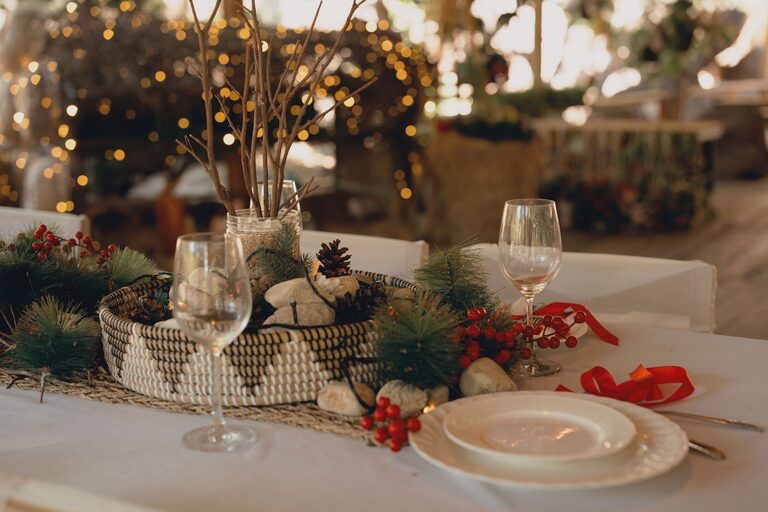
Winter tables can be elegant without feeling formal. Use the quiet beauty of the season as inspiration, focusing on evergreen branches, bare twigs, candlelight, and soft neutral colors.
A winter palette might include white, silver, evergreen, charcoal, and natural wood. For a warmer appearance, add touches of cream, tan, or muted gold. White dishes and clear glassware can create a light, peaceful foundation.
Consider these winter details:
– Arrange evergreen sprigs in small jars
– Use pinecones as natural place card holders
– Add white candles in glass containers
– Fold napkins in simple geometric shapes
– Use silver or wooden accents for contrast
– Place a few berries or dried fruit along the runner
Safety is important when using candles and natural materials. Keep flames away from branches, dried leaves, napkins, and other decorations. Battery-operated candles provide a similar glow and work well for family gatherings or outdoor settings.
Use the Seasons Without Overdecorating
A successful table setting should support the meal, not compete with it. Keep centerpieces low enough for easy conversation, and leave enough room for serving dishes. If the table is small, choose one central arrangement instead of several decorative elements.
A helpful design approach is to select:
- One main color
- One natural material
- One seasonal feature
- One personal detail
For example, a fall table might use olive green as the main color, wood as the natural material, pears as the seasonal feature, and handwritten place cards as the personal detail.
This simple formula keeps the table coordinated while allowing plenty of creativity.
Add Personal Touches
The most memorable table settings often include details that reflect the host or guests. Handwritten menus, family dishes, handmade napkin rings, or small notes can make the setting feel thoughtful.
You can also invite guests to participate. Ask children to help gather leaves or decorate place cards, or let guests take home a small herb plant or seasonal ornament. These personal touches turn the table into part of the experience.
Create a Table That Changes With the Year
Nature-inspired table settings do not require a complete redesign for every season. Start with versatile basics, then update the look with small, meaningful changes. Swap napkins, add a new centerpiece, change the color palette, or bring in a few natural elements from the current season.
By observing the colors, textures, and shapes around you, you can create a table that feels fresh, welcoming, and connected to the time of year. The result does not need to be perfect. A relaxed table with thoughtful details will always invite guests to sit down, enjoy the meal, and stay awhile.